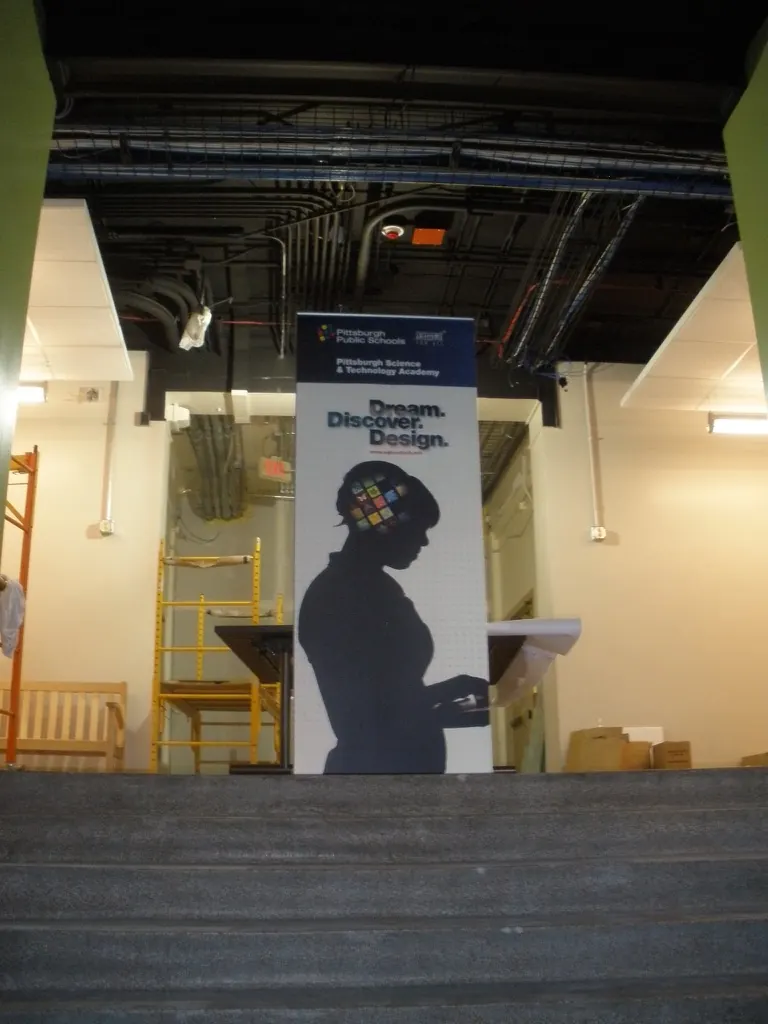
It started with a guest lecture at Carnegie Mellon’s Heinz College. Pittsburgh’s superintendent came to speak, I got his card, and I kept reaching out, even when time with him was hard to get. Eventually a few fellow students and I got him on a call. He explained what the district was facing: a big vision of excellence for all, a major rightsizing that closed many schools, and a plan to open a few new, innovative high schools. They already had a performing arts school. It was his idea that we design one focused on the sciences.
By then we’d missed the deadline for Heinz’s Systems Synthesis Projects, the real-world consulting project every second-year student completes. So I pushed, appealed, found a faculty advisor, and got the project approved. It went onto the menu of options, and ten students signed up, including the four of us who started it. One team worked on the school design, which I led. The other built support, and with the district’s help we formed an advisory committee of city leaders, including the teachers union, local foundations, and Carnegie Mellon. When the semester ended, four of us proposed a second semester to keep going, and that was approved too.
We started from a belief I’d carried out of my classroom in Oakland: every student can succeed with the right amount of time and the right amount of support. The catch is that both have to vary, sometimes dramatically, from one student to the next. So the design was a public sixth-through-twelfth-grade school that would prepare every student for college and advanced science and technology work, without assuming they’d all get there on the same path or the same schedule.
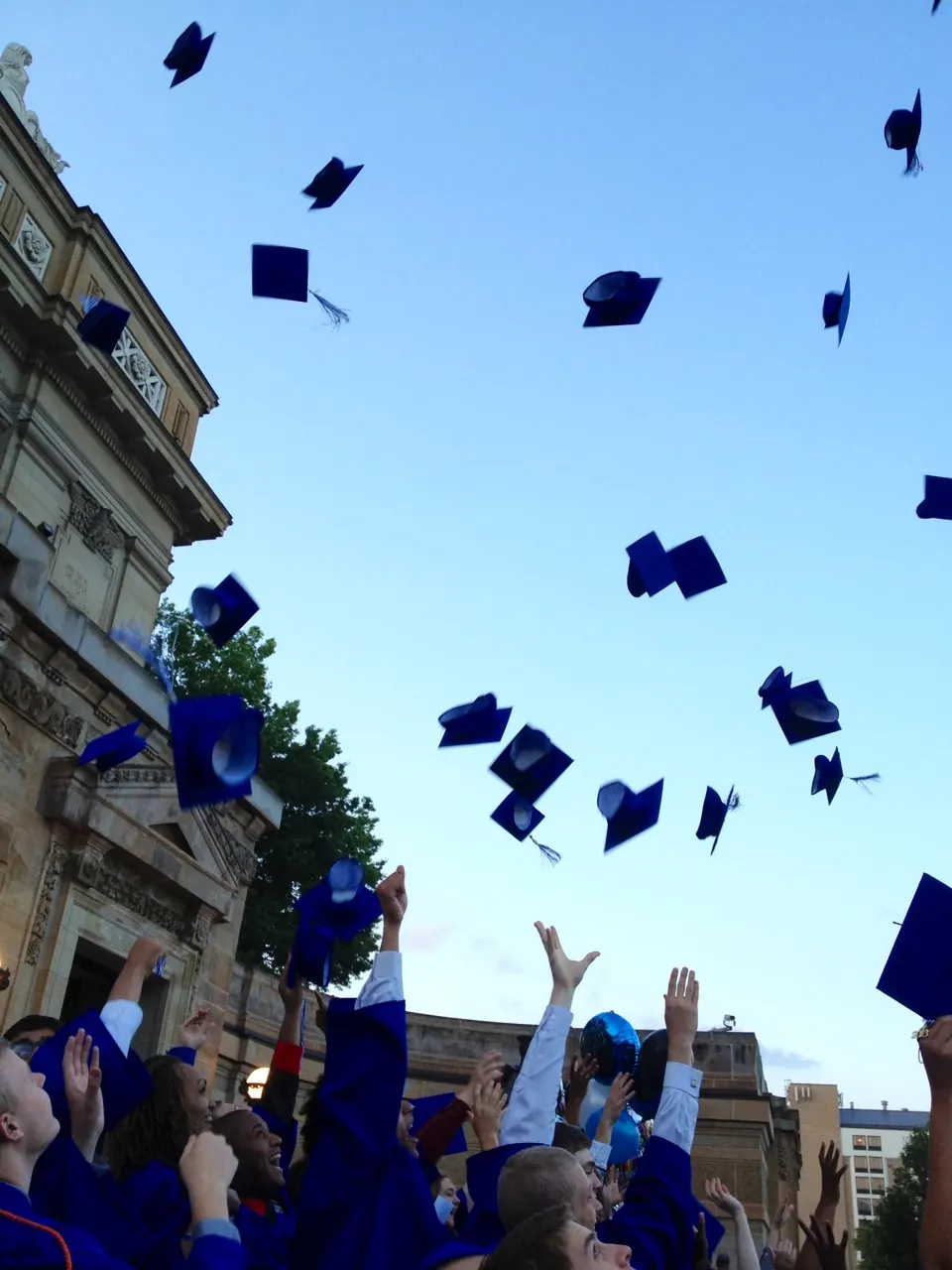
By the time I graduated, the idea had enough momentum that the superintendent hired me to work full time out of his office and open the school. It took two more years. In 2009, Pittsburgh Science & Technology Academy welcomed its first students in grades six through nine, then added a grade each year until it served six through twelve. By then I’d moved on to the district’s teacher effectiveness work, but I came back for the first graduation.
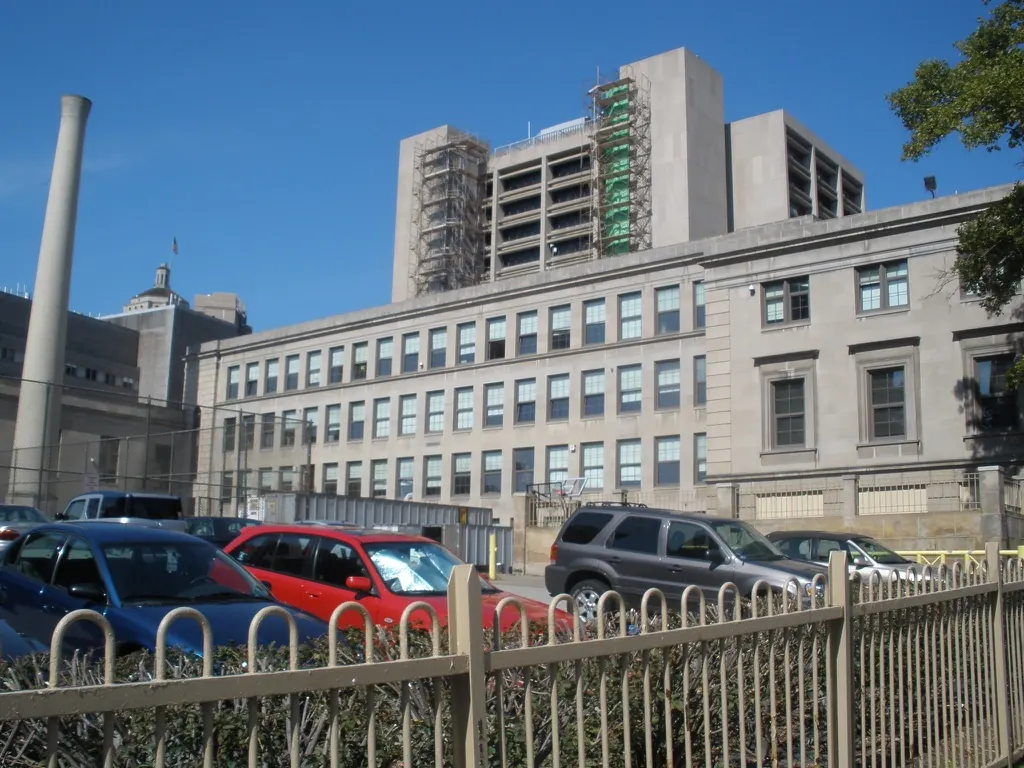
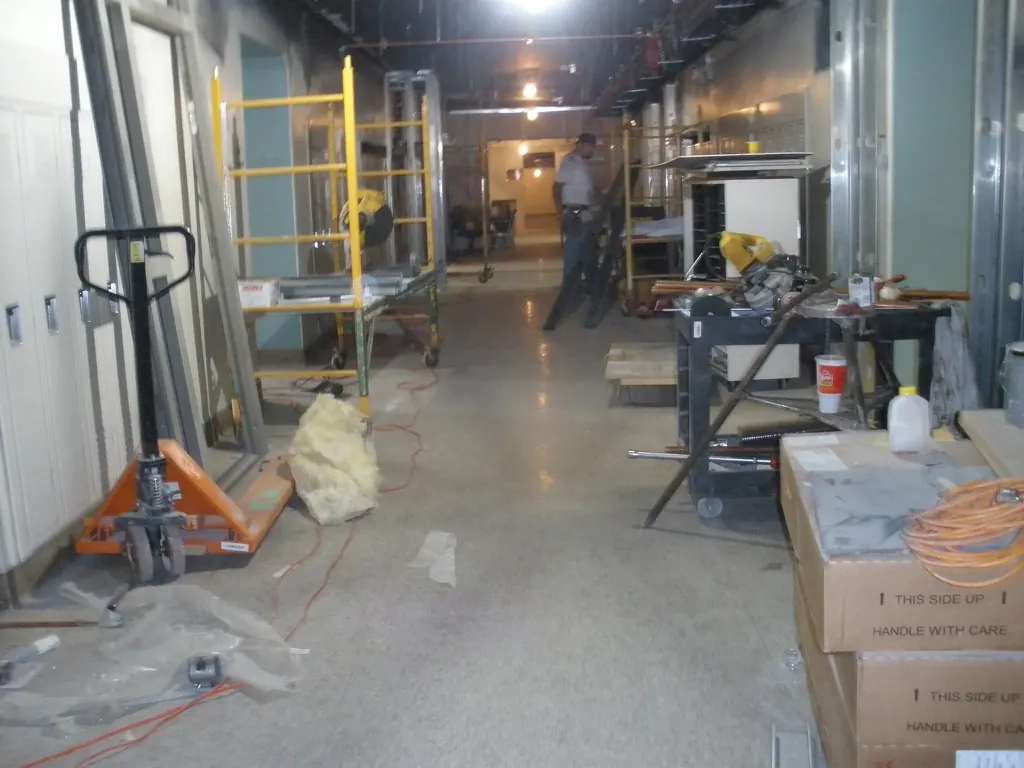
Turning a plan into a functioning school meant building a course catalog, hiring a team, winning new policy pathways from the school board and through work with the union, recruiting students and families, and designing and renovating an old building. But the hardest and most interesting part was the master schedule. If time and support were going to vary from student to student, the schedule had to do that on purpose, so students reached advanced STEM courses actually prepared for them. Hundreds of people helped shape it. The heart of it was always the students, the teachers, and the team who made it real.
Built around time and support
Math was where time varied most. Key courses came in semester and yearlong versions, so students could take the pace that got them ready. Quarter-long electives tucked into different spots and gave the schedule room to flex. A sequence of postsecondary preparation courses, including college research and applications, was built into the school day instead of left to whoever had help at home.
After ninth grade, students chose a concentration: life science, environmental science, computer science, or engineering. They took a sequence of courses in that area. The goal wasn’t to push them into a career. It was to teach them how to learn something deeply.
Instead of grade levels, students moved through three levels: Associate, Manager, and Executive. They echoed the school’s motto, Dream > Discover > Design, which was inspired by Alfred North Whitehead’s idea that learning moves in rhythms, starting with romance. The Executive Level was meant to be the final stage whenever a student reached it, not a fixed year. It brought everything together in a set of capstone courses: an advanced course in their concentration, research methods, the last course in the postsecondary sequence, and a cross-concentration project on a real-world problem, a lot like the CMU project that designed the school.
What didn’t work
Much of that design held up. The most fundamental idea didn’t. In practice, Executive Level became another name for senior year, which was exactly the problem. The technical design let students take more or less time. What we never did was the deep work on the people side: helping students, families, and educators let go of the assumption that high school takes four years, and building a new way of thinking to match the design. That was my first real lesson that changing a system is as much about culture as it is about structure.
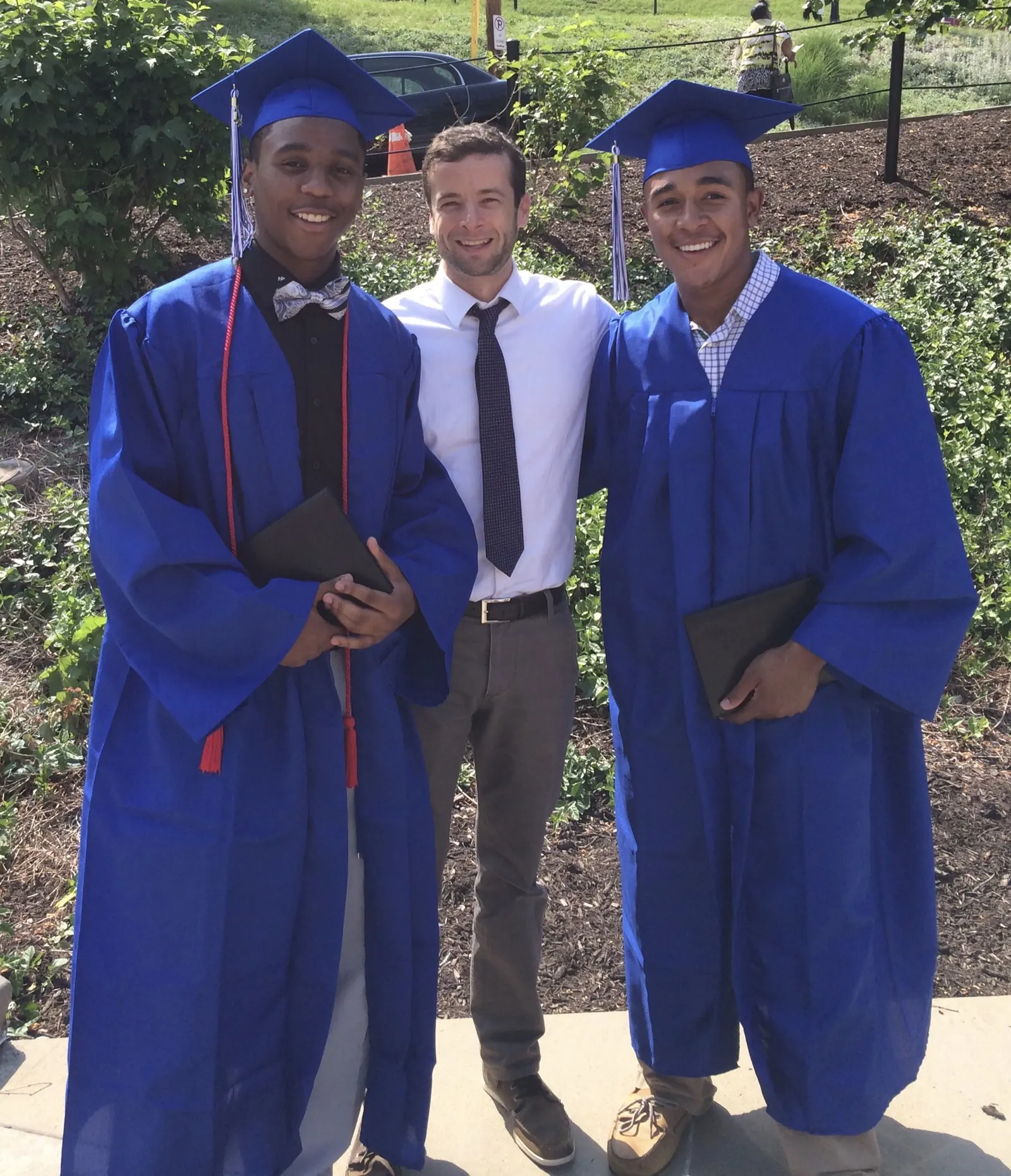

“From opening SciTech to leading challenging citywide change initiatives, Sam was always transparent about what was working and what wasn’t, thoughtful about how others could help, and skilled at bringing people together to get big things done.”
That experience shaped nearly everything I’ve done since. I love a vision. I care just as much about what it takes to bring it into the world, and how people experience the trip.
Years later, a team of my graduate students at Heinz went back through the archives of everything we used to open the school and turned it into a school design toolkit, then used it on a new school design project with The Pittsburgh Promise.
From the archive
Two artifacts from the early days: the handout from our first information sessions for families, and the program graphic showing how students move through the Academy.