The story, more or less
Big ideas. And the people who make them real.
I’m an educator, a founder, an organizational leader, a dad, and an enthusiastic amateur at an unreasonable number of things. Here’s roughly how that happened.
In short: Sam K Franklin is co-founder and CEO of Outside Angle, partnering with teams and organizations across the United States on leading change, team performance, and culture. He founded Pittsburgh Science & Technology Academy, led teacher effectiveness work for Pittsburgh Public Schools, served as Vice President of Schools at AltSchool, and was an Executive Resident at Carnegie Mellon University’s Heinz College. He’s based in Asheville, North Carolina.
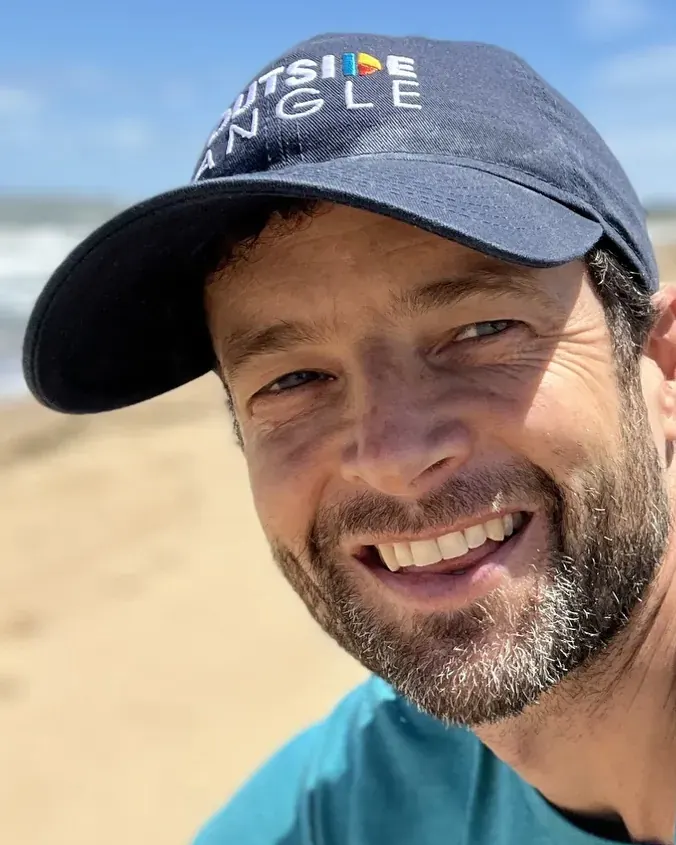
01An island in between.
I grew up on Kent Island, in the Chesapeake Bay, in an in-between place: between North and South, the Eastern and Western Shores, working-class and privileged cultures, Black and white, the farmland of Centreville and the cities of Annapolis, Baltimore, and DC. It prepared me to fit in anywhere and nowhere. I learned to empathize and connect with all kinds of people while never feeling completely at home, and to follow my own path.
My parents were educators and entrepreneurs. My mom was a teacher who always pushed what was possible. My dad owned educational toy stores: small businesses deeply rooted in their communities and built on trust and relationships. I think about both of them a lot in the work I do now.
I was also a kid who loved to read. Books made the world bigger. They introduced me to lives, places, and ideas far beyond my own, and helped me imagine things that didn’t exist yet. Looking back, they shaped my sense of what was possible, and eventually my decision to become a teacher.
Growing up there also made me aware of the racism and inequity around me. I’ve been trying to understand those forces better, and to do something useful about them, ever since.
02Teaching, then a school.
After college at Kenyon, I joined Teach For America and taught sixth-grade math and science at Elmhurst Middle School in East Oakland. My students taught me far more than I taught them. They confirmed what I already believed: kids rise to real opportunities. They also showed me how unevenly those opportunities are handed out. Some of my students were succeeding despite the odds. Others did everything we asked of them and still weren’t being prepared for what came next.
I came away convinced that we fail kids in two ways. One is not believing they can succeed, and quietly passing them along. The other is pretending they can succeed inside the same system that’s failing them, with just better teaching and a little more support. Every student is capable of success, but not on the same path, in the same amount of time, with the same support.
I went to graduate school at Carnegie Mellon’s Heinz College. After a guest lecture by Pittsburgh’s superintendent, I got his card and kept reaching out until a few classmates and I got a call with him. The district was in the middle of a major rightsizing, closing schools while opening a few new, innovative high schools, and he asked us to design one focused on science. We’d already missed the deadline for Heinz’s required Systems Synthesis consulting projects, so I pushed for an exception, found a faculty advisor, and got it approved.
Ten students signed up. We spent two semesters on the design, backed by an advisory committee of city leaders, and by graduation it had enough momentum that the superintendent hired me to open the school out of his office. Two years later, in 2009, Pittsburgh Science & Technology Academy opened its doors. The heart of the design was a master schedule built to vary how much time and support each student got, so every student could reach advanced STEM coursework actually prepared for it. Turning that into a real school, with a course catalog, hiring, new policy pathways through the school board and the union, student and family recruitment, and a building renovation, was the best education I’ve ever had.
I love a vision. I care just as much about what it takes to make it real, and how people experience the journey.
03Inside complicated systems.
I stayed in Pittsburgh Public Schools. From 2010 to 2015 I launched the district’s Office of Teacher Effectiveness and served as Executive Director, Human Resources, leading one of the country’s largest efforts to improve teaching in a public school district, across more than fifty city schools.
We worked with hundreds of teachers, union leaders, community organizations, and national experts to build a way of understanding teacher performance that was accurate enough to matter: to give teachers useful feedback, and to inform decisions about pay, promotion, and who should keep teaching. I worked closely with two superintendents and learned firsthand what it takes to change a century-old organization.
We had some big successes. We also hit major barriers and fell short of the ambitious goals in our original plan. Nothing important happened because one person had a clever idea. It happened because a team kept showing up for each other, including on the days it wasn’t working. The fuller story is here.
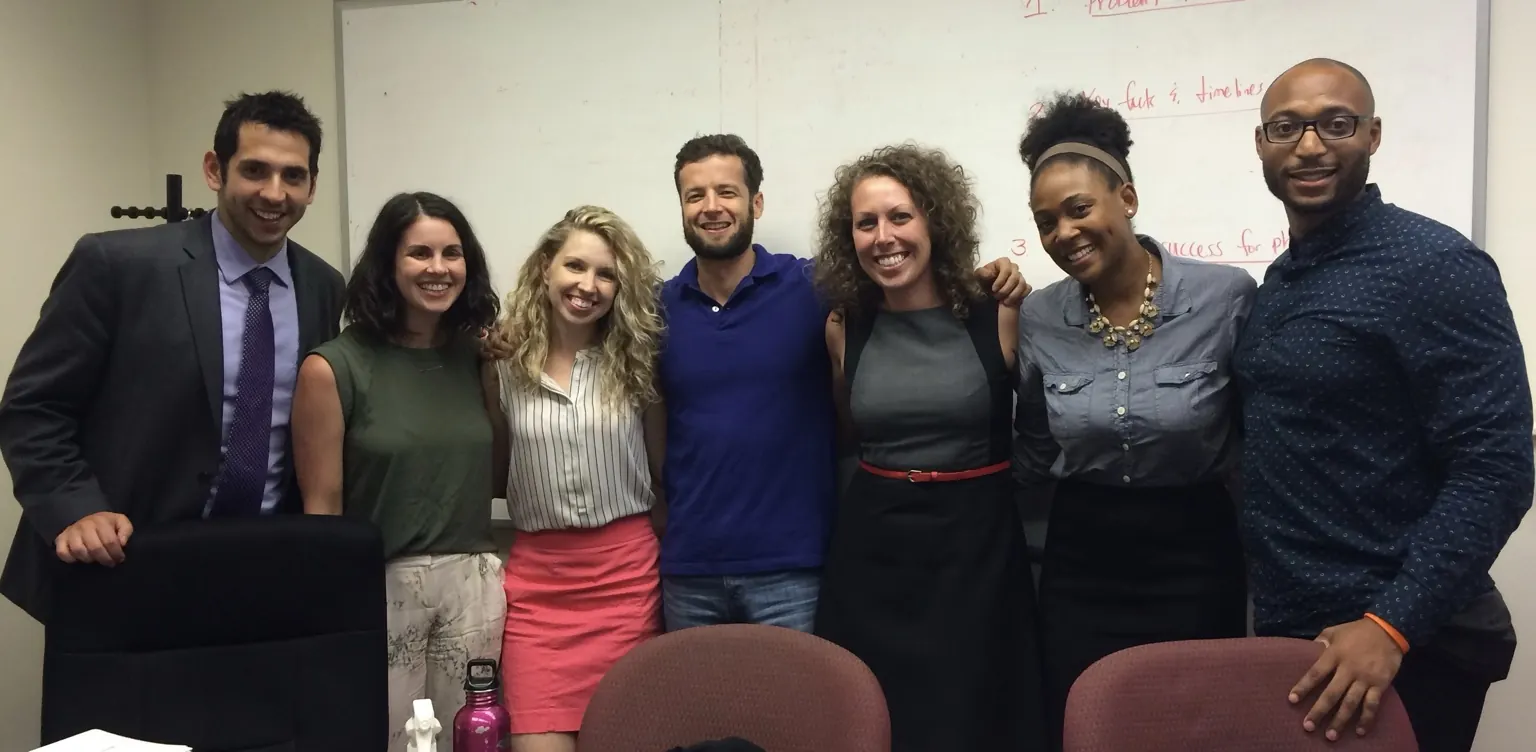
Afterward I went back to Carnegie Mellon, this time to teach. I spent eighteen months as an Executive Resident and full-time professor at Heinz College, taught five master’s courses on leadership, change, and education policy, and designed a course on the societal consequences of technological change that became a model for others. More on the teaching.
04When it didn’t go as planned.
In 2017 I joined AltSchool, a venture-backed education startup, as vice president of schools, leading its network of small schools on both coasts. It was an ambitious place full of smart people trying to rethink how schools work. It was also a place where strategy shifted quickly, and the company went through a major restructuring.
I managed school closures, mergers, and transitions. Some of the most formative experiences of my career were decisions that were painful for families and colleagues I cared about. I won’t pretend they were secretly triumphs. They taught me that the right thing to do isn’t always obvious, that careful preparation doesn’t guarantee a smooth path, and that how people are treated along the way matters enormously. More on that chapter.
It also changed how I think about planning. We can’t predict or control what comes next, not in a market, an organization, or a family. We can build the curiosity, judgment, relationships, and flexibility to navigate the future we actually get. I still love a good plan. I’m learning to hold it more loosely.
Inside and outside traditional systems, I keep building things aimed at expanding opportunity. Some have worked. Some haven’t. I’m still learning what the best levers are.
05Outside Angle, and gathering people.
In 2020 I cofounded Outside Angle, and today I lead it. We’ve worked with more than thirty organizations across the country, from small nonprofits and school systems to universities, foundations, and Fortune 500 companies. We partner with mission-driven organizations on team performance and culture: helping people work through change with rigor and care, and get better at making progress together. If you’re looking for that kind of help, that’s the place to start.
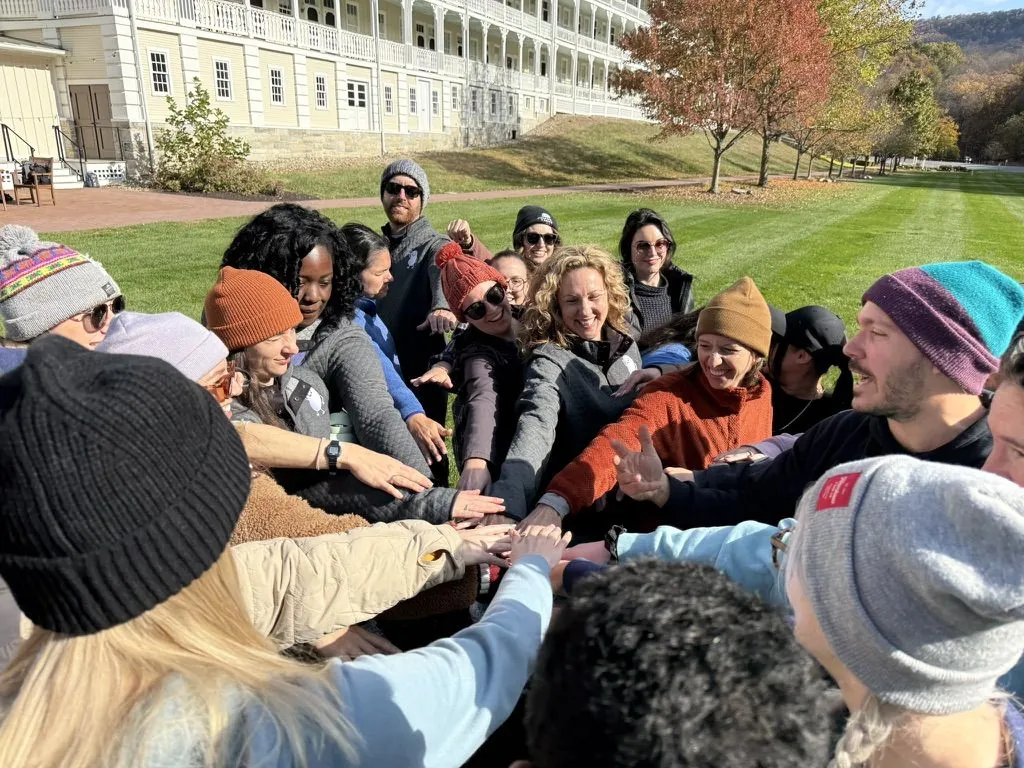
I also love helping founders think through hard problems, and I continue to mentor startup founders through Venture Asheville. And I love a room full of people who don’t agree yet. I’ve hosted and emceed gatherings including the brAIn Hub AI Summit and The Healing Frontier, where my job is to help people laugh, take each other seriously, and leave a little less certain than they arrived, in a good way.
Speaking, hosting, and workshops: on leading change, education, and social entrepreneurship, or any gathering that needs to hold humor and hard questions in the same room. Here’s how we might work together.
06The rest of life.
Being a dad is the most humbling role I’ve ever had. I’ve spent decades learning about motivation, leadership, and how people grow. You might think that would make parenting easier. You might think.
My wife, Leslie, and I moved to Asheville with our kids in 2019. We were here through Hurricane Helene and saw devastation and resilience up close; I served on the steering committee of the region’s Long Term Recovery Group. We explore in our camper van, Wanda. I played basketball at Kenyon, coach youth basketball now, and still play some myself. I like hiking, fishing, and being outside. Reading is still a thread through everything, and sharing books with my kids is one of the best parts of my week.
Hip-hop has been a huge influence on me. My own contributions were mostly enthusiasm: I was a bad amateur DJ who never really mastered mixing, I tried a few open mics, and I made some rough recordings and music videos with friends. Lately it’s comedy open mics. I love funny people, and I periodically take a joke much further than anyone asked me to. There has been a party fifteen years in the making, Halloween sculptures, a fictional organization called Kopp’s Cops, and a poem about two cheeses falling in love.
Some days life feels too serious. I’m trying to leave more room for curiosity and a really good laugh. If that sounds like your kind of thing, say hello.
In other people’s words

“Sam is a tremendous leader who has a unique skillset for managing complex change. His ability to maintain strong relationships as he organizes projects and executes on tasks is a tremendous contribution to any organization.”

“Sam is a great leader, a very sharp thinker and an outstanding communicator… His humility and sense of humor is a great added bonus for anyone that works with him.”

“His passion for social justice and commitment to not just quality outcomes but also quality process [differentiate] him from other talented professionals.”

“He’s helped us respond to urgent opportunities, clarify our strategy, and think through important decisions.”
From recommendations on LinkedIn.