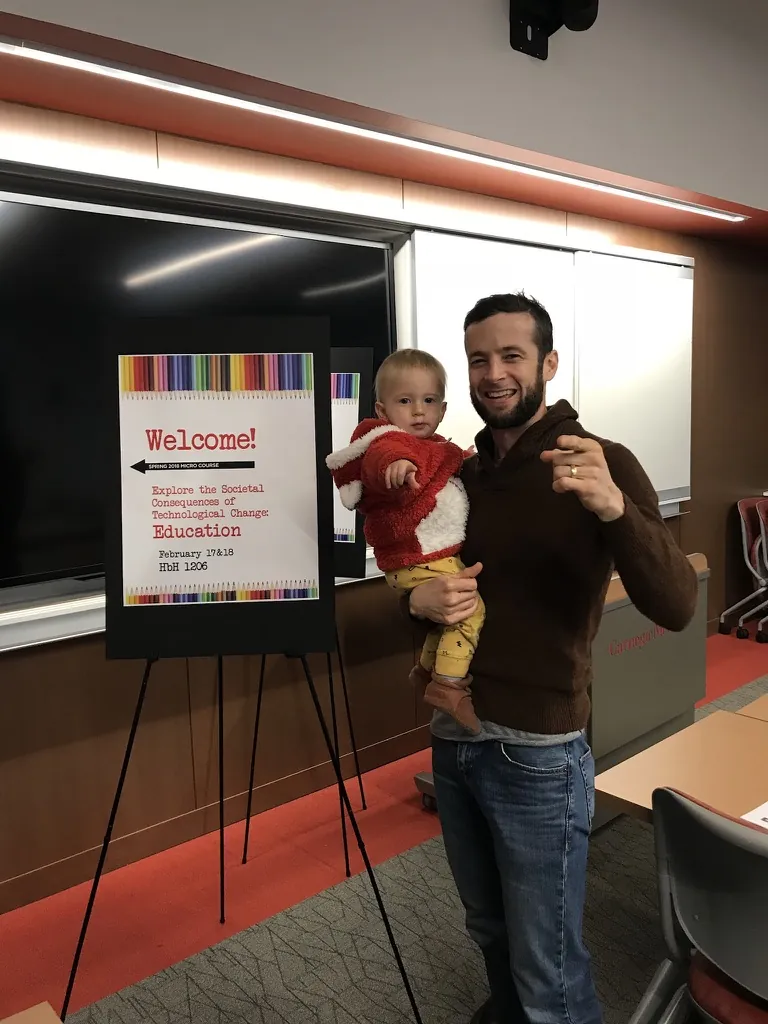
After my years in Pittsburgh Public Schools, I spent eighteen months as a full-time professor and Executive Resident at Carnegie Mellon’s Heinz College, the same school where the idea for Pittsburgh Science & Technology Academy began. I taught five master’s-level courses on leadership, managing change, education policy, and the future of learning, and stayed on afterward as adjunct faculty.
The course I’m proudest of is Societal Consequences of Technological Change: Education, a short course on how new technology might reshape learning, who would gain and who would lose, and what we should be doing about it now. It became a model for a series of similar courses on other fields, including transportation, and I came back to teach it each winter.
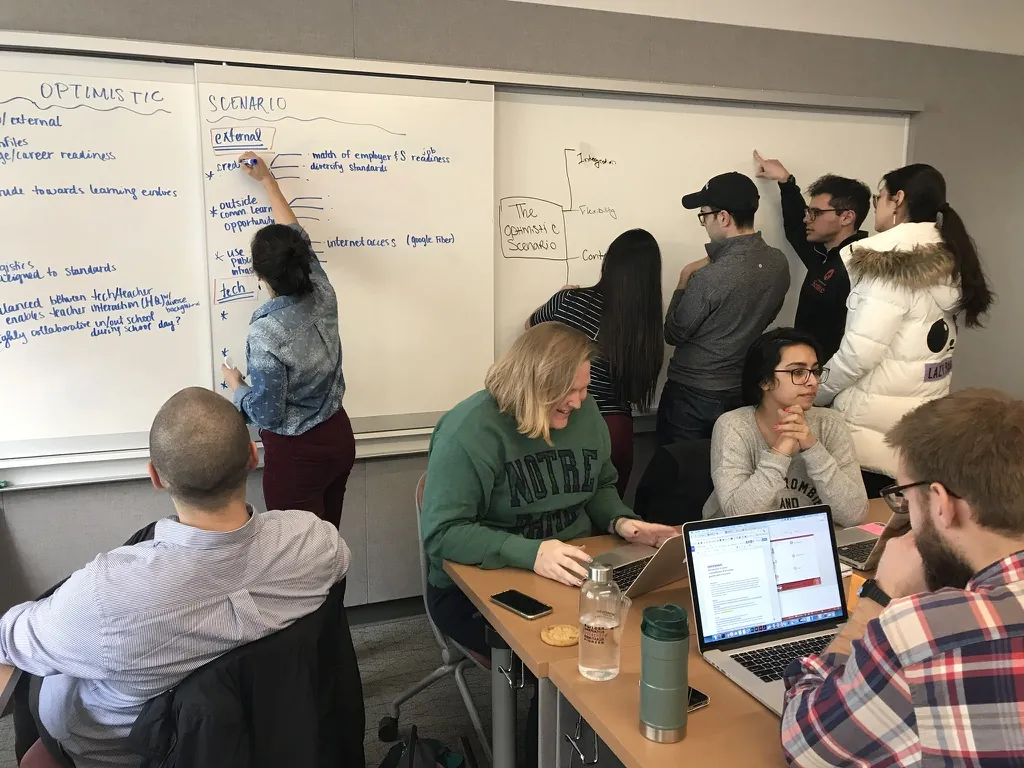
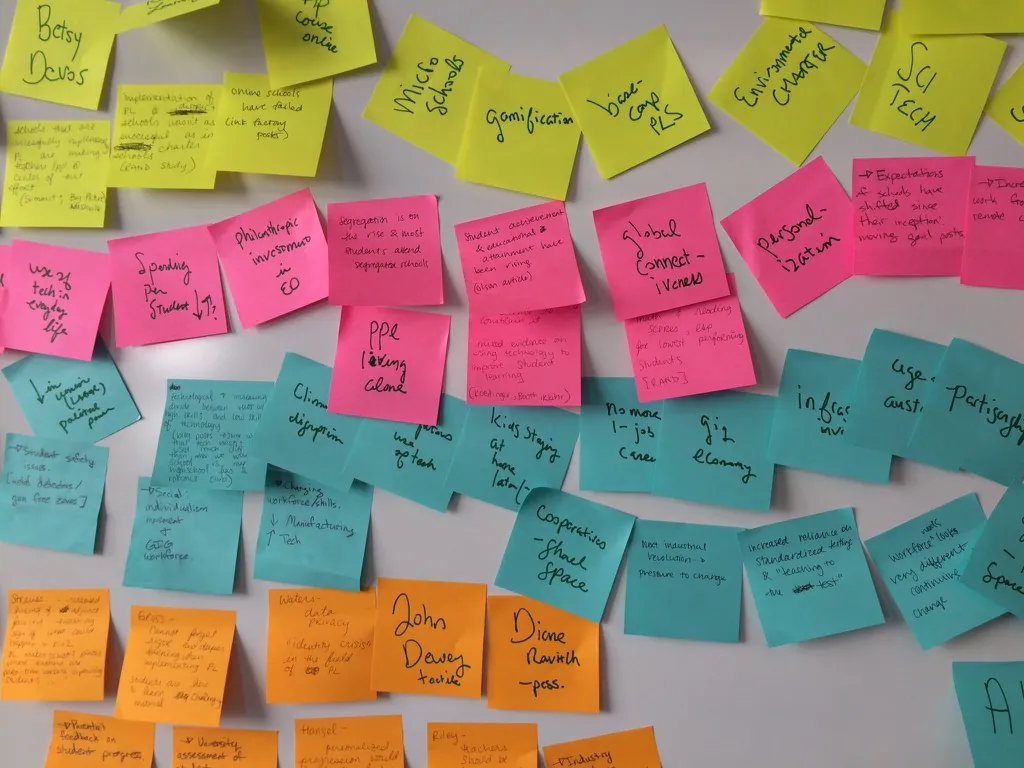
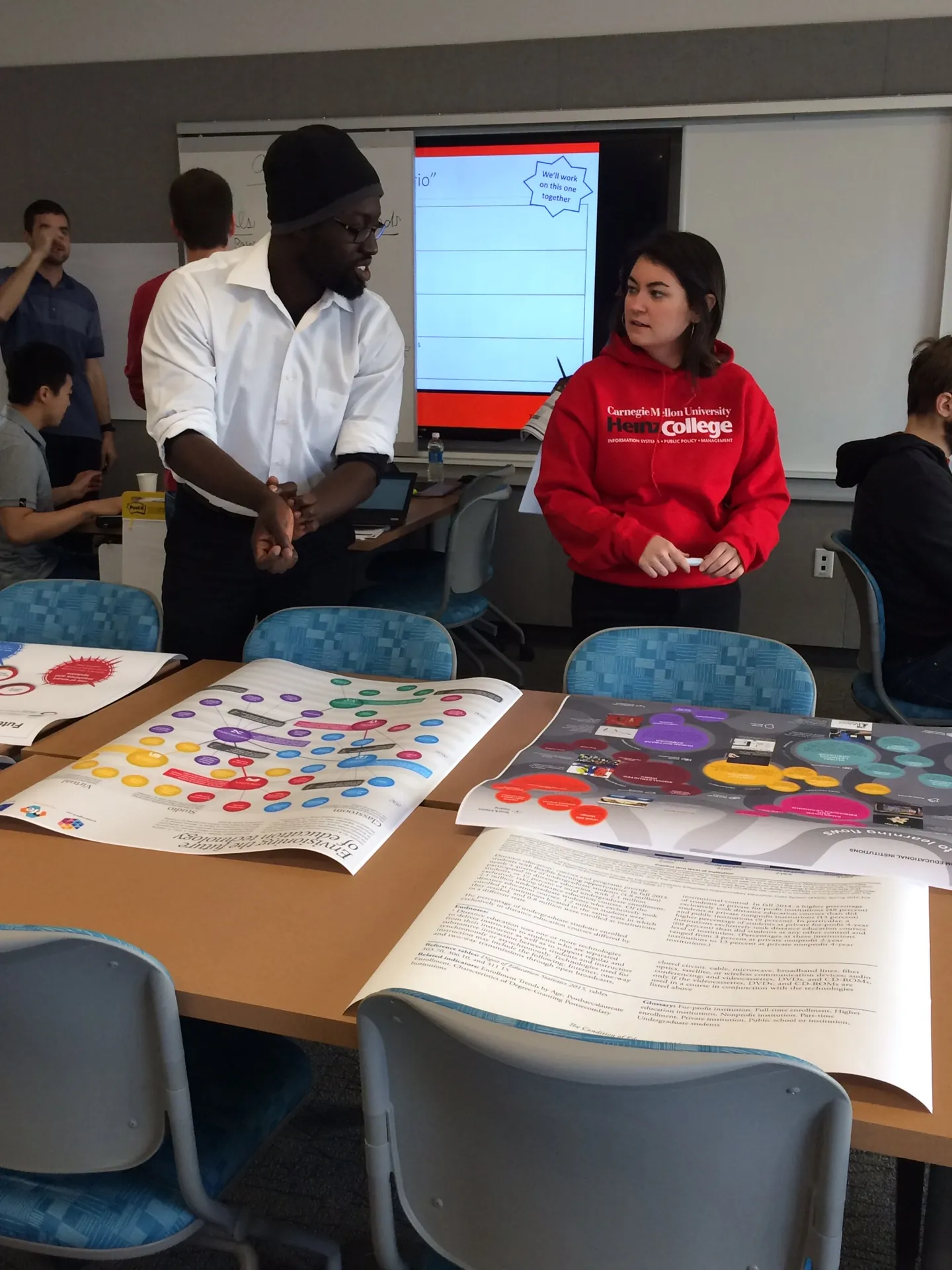
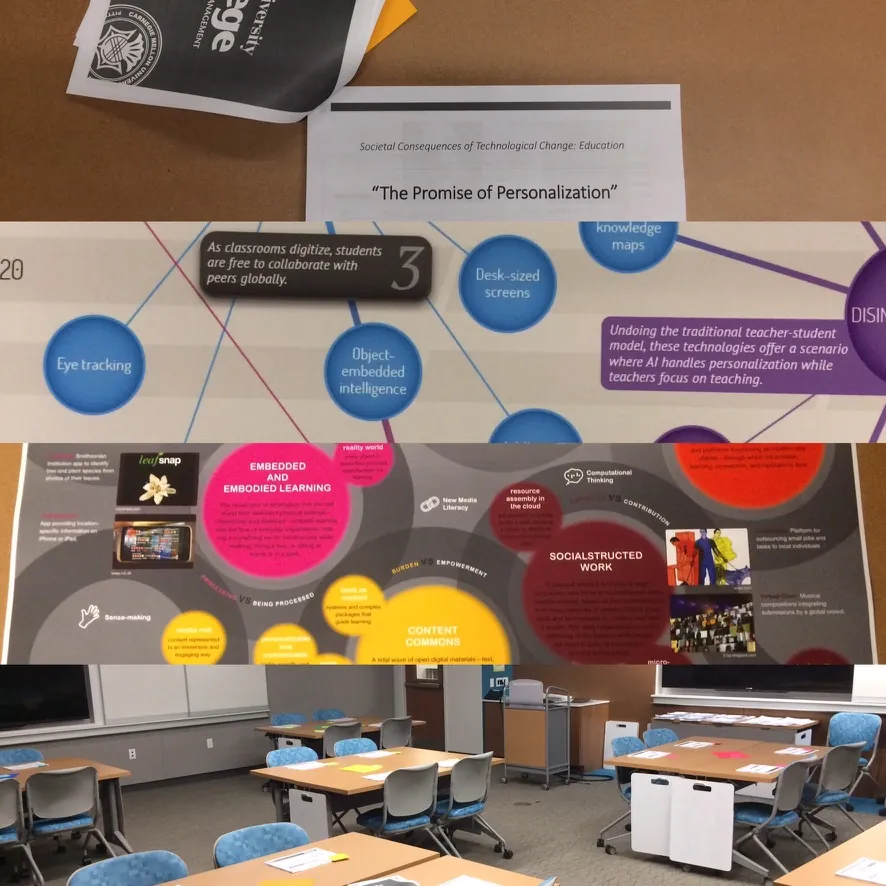
Scenarios, sticky notes, and a lot of posters about the future.

“During his executive residency, Sam developed several new courses. One of them, Societal Consequences of Technological Change, became the blueprint for a series we continue still.”
The others:
- Policy and Leadership in Public Education: the essentials of American public education, from history and governance to how you actually lead change inside it.
- The Future of Learning and Education Policy: the promise and perils of personalized learning, frontiers in school design, and technology in and beyond the classroom.
- Education Policy Workshop: how to take a big idea from start to finish in a challenging environment.
I also recorded four short briefings that students watched before class, a crash course in how K–12 public education in the United States actually works:
- The purpose of public education is contested
- The system is highly decentralized
- How well the system is doing depends on who you ask
- Improving our schools is a serious management challenge
My own background is in political science, public policy, and management, and that’s the lens I still use: you can’t lead change well in a system you don’t understand, including its governance, its politics, and the arguments people are really having underneath.