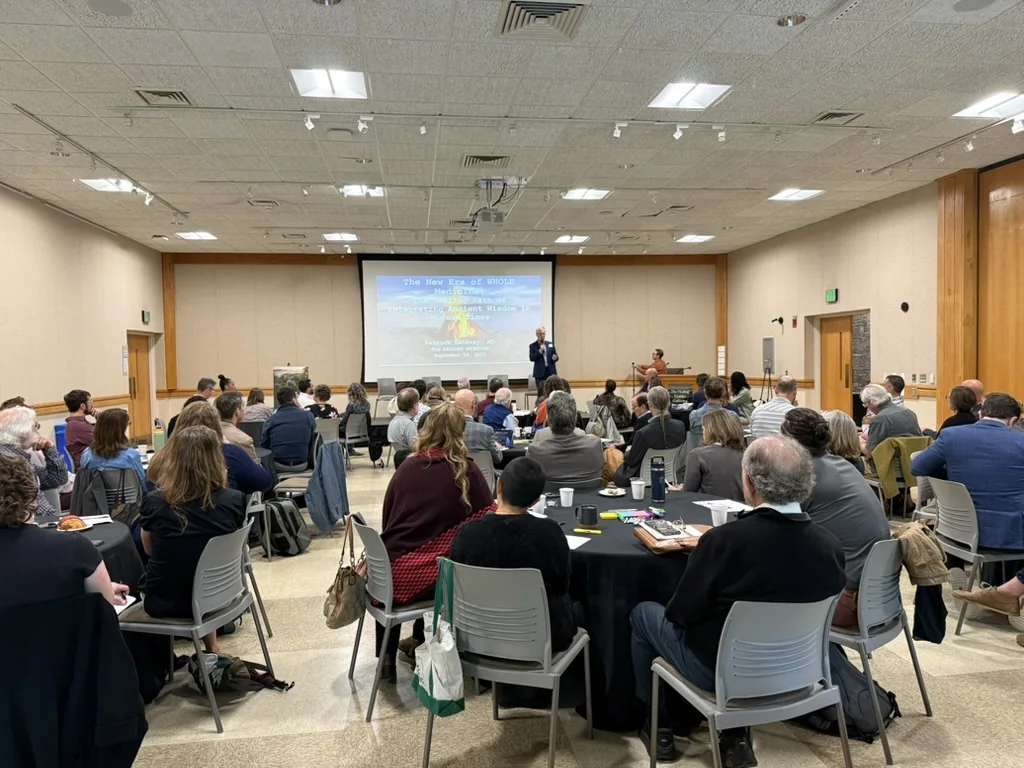
In September 2026, more than sixty people gathered at the North Carolina Arboretum for The Healing Frontier: growers and herbalists, neuroscientists and physicians, investors, entrepreneurs, and community leaders, all asking what Western North Carolina could become at the intersection of natural products, healing, and place.
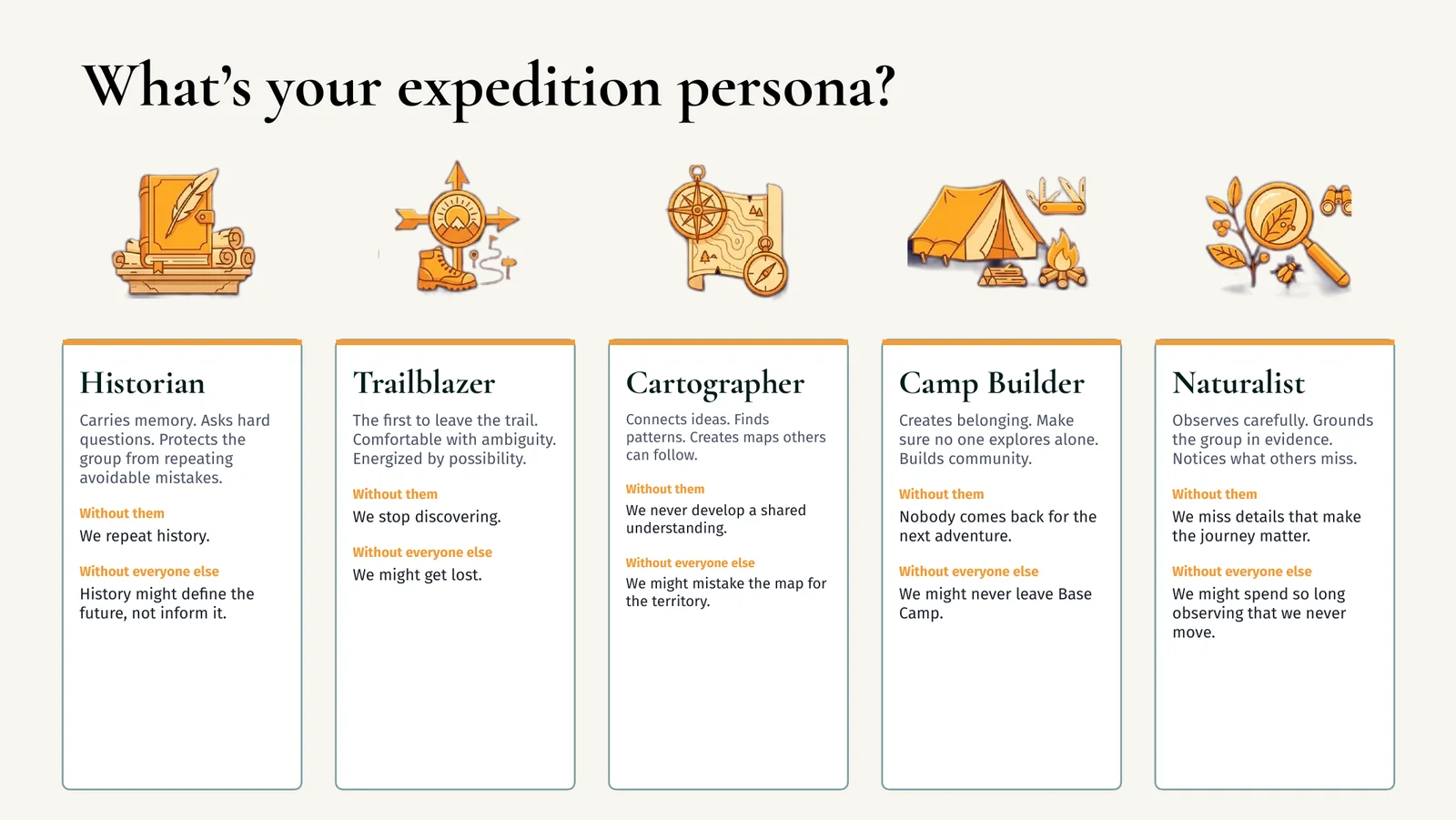
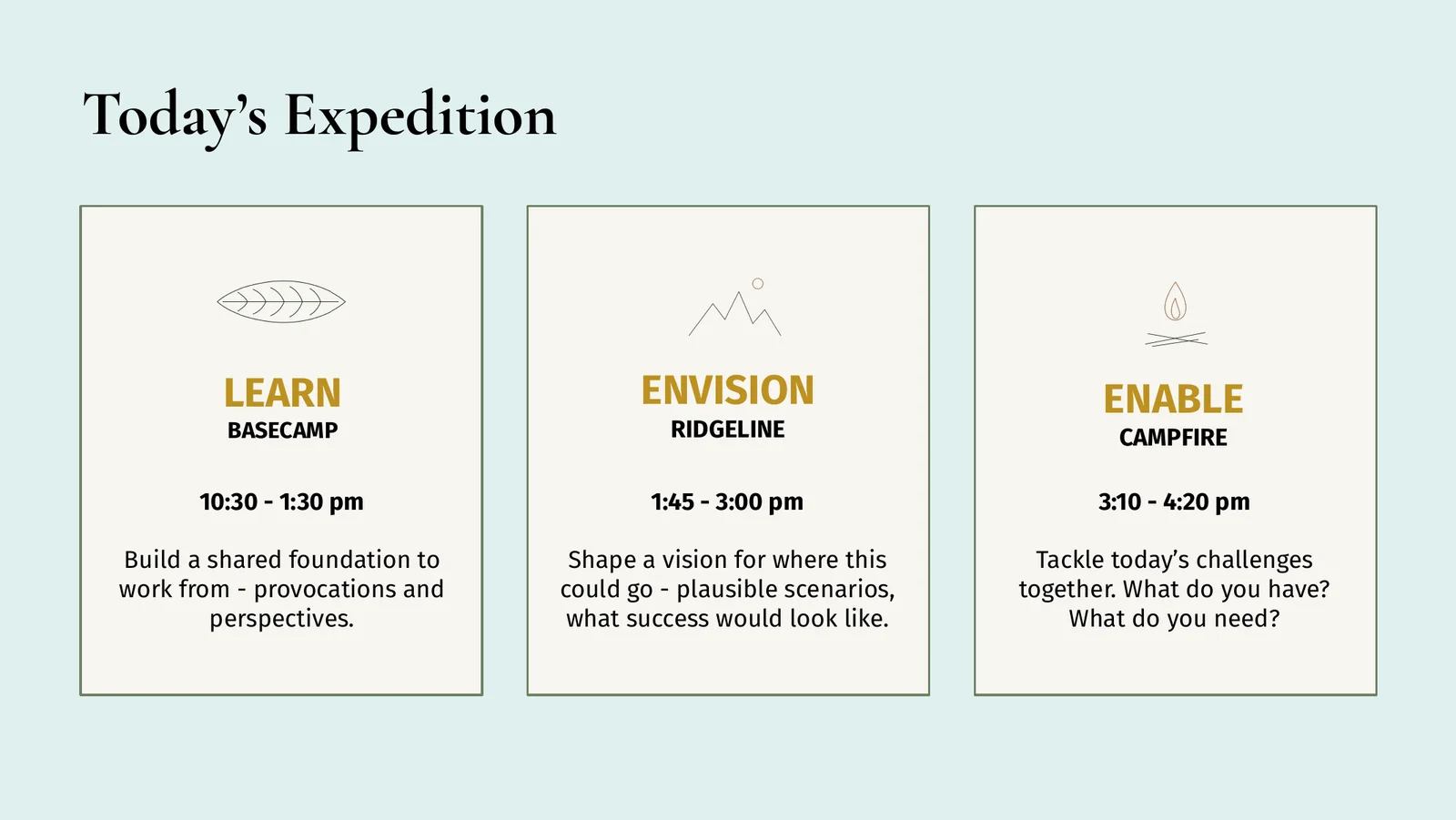
I co-designed the day with Alex Simon of Sensorium Therapeutics, with help from my Outside Angle colleagues, and I emceed it. We framed it as an expedition. Everyone started by picking a role: Historian, Trailblazer, Cartographer, Camp Builder, or Naturalist. Then we moved through three legs: Learn at basecamp, with talks from leading scientists and clinicians; Envision at the ridgeline, where groups made posters of the region’s healing economy in 2036; and Enable around the campfire, a marketplace where everyone posted one thing they wanted and one thing they could offer.
Between sessions, I pitched a few natural products of my own. There was the Steakle, a small piece of sticky beef for holding papers together that doubles as a snack. And there was the Shellmet, a helmet made from naturally deceased beetles, which would require only 85 percent of Western North Carolina households to take up beetle farming. Nobody invested. Everybody laughed. And a room full of people who didn’t know each other got a little looser, a little braver, and a lot more willing to imagine.
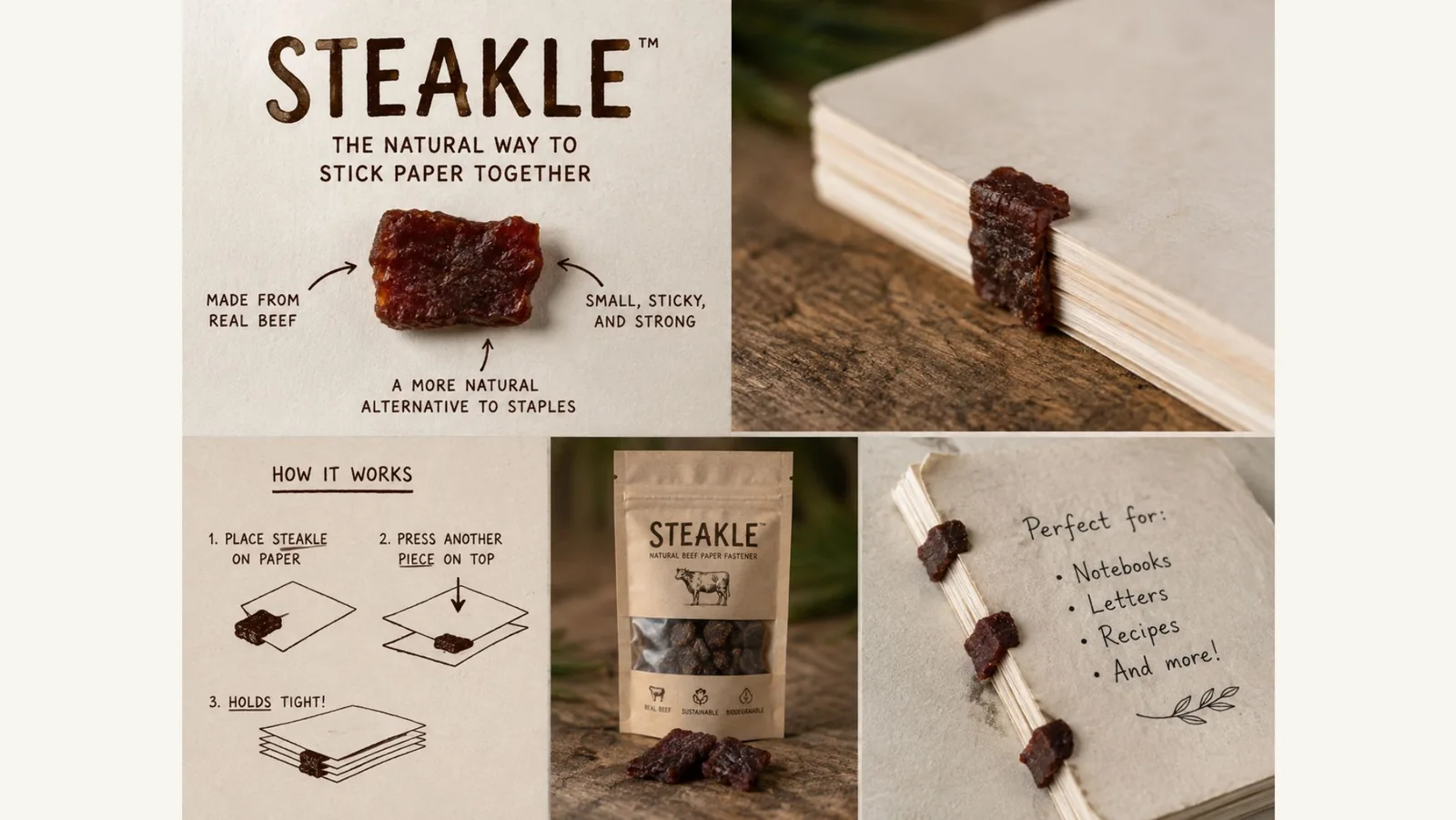

Natural product pitches. Investors were not persuaded.
That’s the move I love: hold the serious question and the silly one in the same room, and let each make the other better.
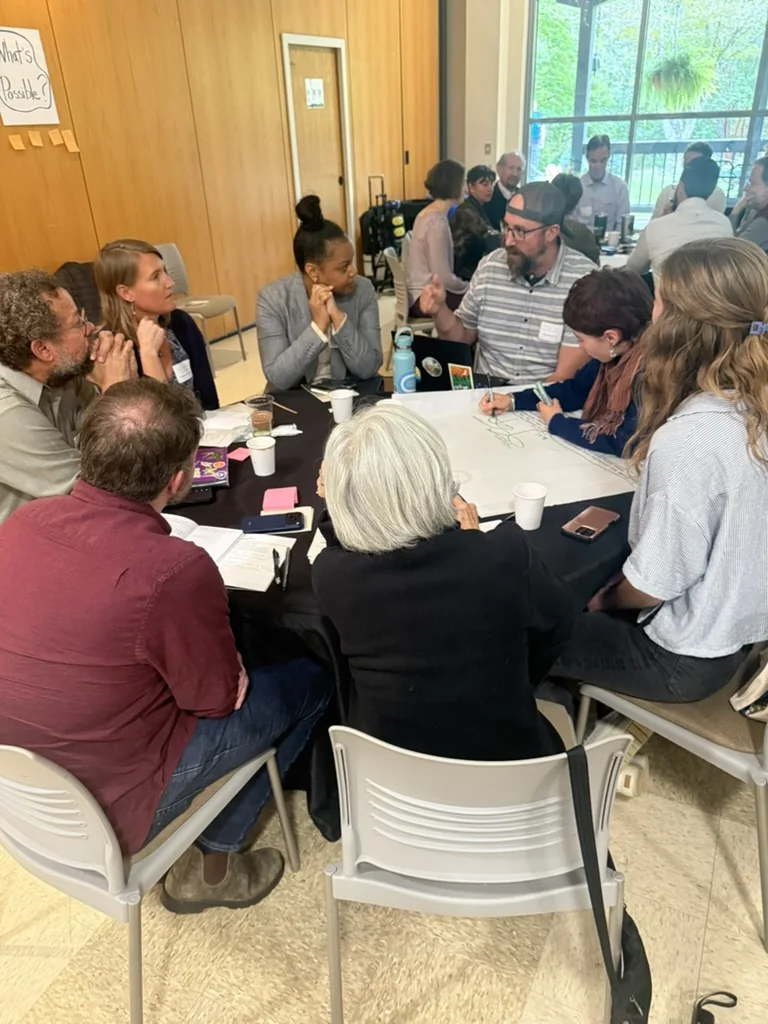
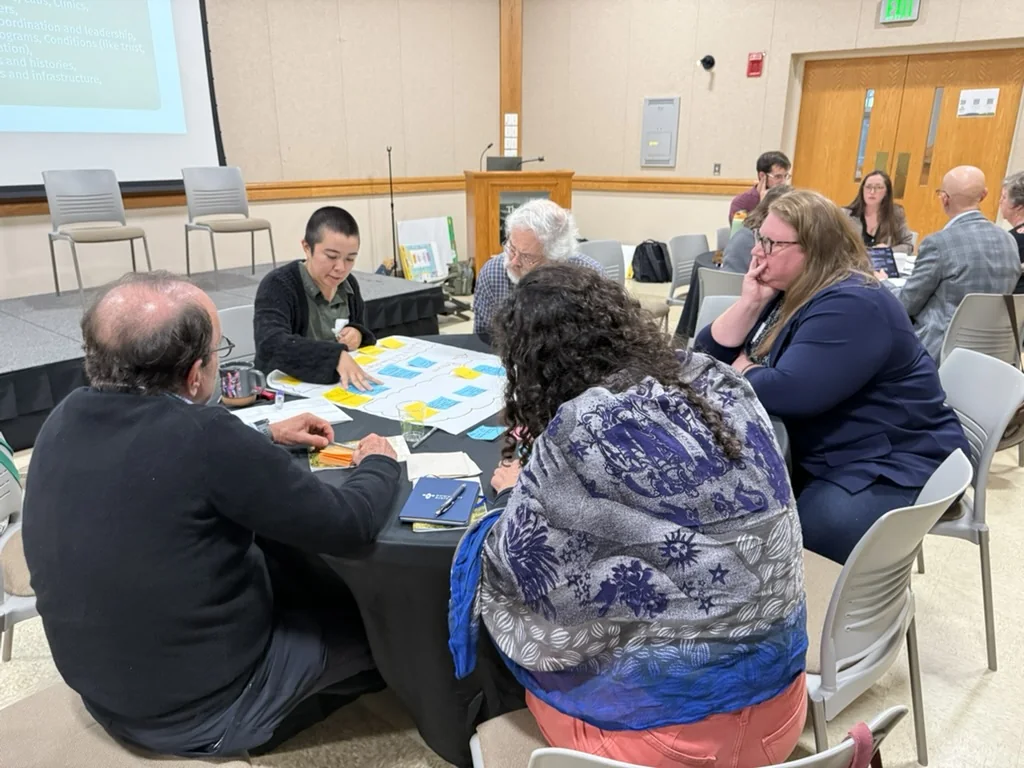
Envisioning the region’s healing economy in 2036.
The same edge, in a classroom
I’ve been chasing this kind of question for a long time. At Carnegie Mellon, I designed and taught Societal Consequences of Technological Change: Education: what new technology might do to learning, who would gain, who would lose, and what we should do about it now. It became a model for similar courses in other fields. More on the teaching.
And at a recent AI summit, I helped a room full of people sort themselves into Ostriches, Drum Majors, Tide Riders, Toe Dippers, and Brake Pumpers. That story is here.